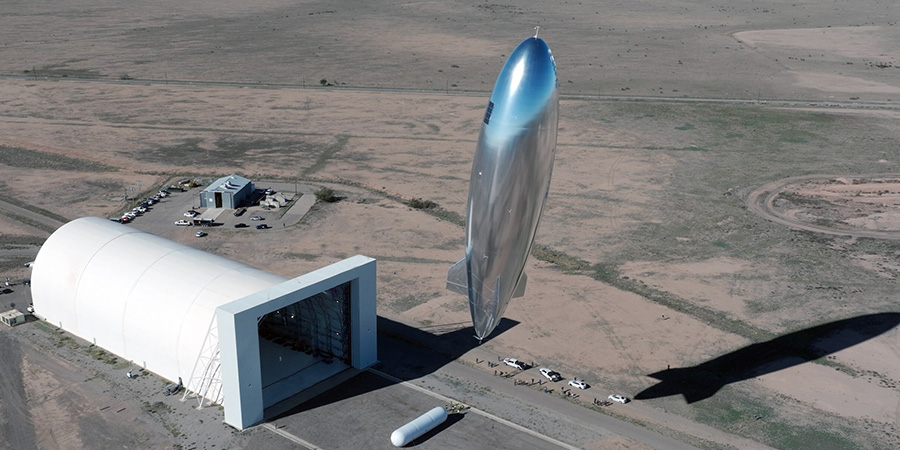
Sceye HAPS Specifications That Include Payload, Endurance And Battery Breakthroughs
1. Specifications Let You Know What a Platform Can Actually Do
There's a tendency in the HAPS sector to focus on goals instead of engineering. Press releases talk about coverage zones partnerships, coverage areas, and commercial timelines, but the harder and more informative discussion is about specifications – what the vehicle actually holds and how long it remains up, and what systems of energy make continuous operation feasible. For anyone trying figure out the possibility of a stratospheric technology being genuinely mission-capable and not in the promising-prototype phase, the payload capacity, endurance data and battery performance are the main areas of discussion. It is easy to make vague commitments to "long endurance" and "significant payload" are a breeze. Delivering both simultaneously at stratospheric altitude is the engineering issue which differentiates credible announcements from the frenzied announcements.
2. Lighter-than-Air Architecture Changes the Payload Equation
The most important reason why Sceye's design can support a significant payload is that buoyancy handles the basic task of keeping the vehicle airborne. This isn't a minor distinction. Fixed-wing solar airplanes generate aerodynamic thrust continuously that consumes energy and puts structural constraints on the vehicle which limit the extra mass the vehicle can sensibly carry. An airship that's floating at the top of the atmosphere doesn't use energy fighting gravity in the same manner — so the energy generated by the solar array as well as the structural capacity of the vehicle, is able to be utilized for stations keeping, propulsion and the operation of the payload. The result is a payload size that fixed-wing HAPS designs, with similar endurance really struggle to match.
3. Capacity of Payload Determines Mission Versatility
The practical significance of higher payload capacity is obvious when you take a look at what stratospheric missions actually require. The payload of telecommunications – antenna systems, signal processing hardware, beamforming equipment — has real weight and size. So does a greenhouse gas monitoring suite. And so does a wildfire identification as well as an earth observation. Any of these missions properly requires a large amount of hardware. To run multiple missions at the same time requires more. Sceye's airship specifications were developed around the principle that a stratospheric aircraft should be able to carry a genuinely practical combination of payloads as forcing operators to pick between observation and connectivity due to the fact that the vehicle won't be able to handle both simultaneously.
4. Endurance is Where Stratospheric missions can win or lose
A platform that reaches high altitudes for more than up to 48 hours prior to needing to descend is useful for demonstrations. A platform that is able to remain in position for months or even weeks at one time is helpful for creating commercial services. The distinction between those two possibilities is mostly related to energy — specifically, whether the vehicle can produce enough solar power during daylight to operate all devices and recharge its batteries enough to provide complete operation through the night. Sceye endurance targets are based around this challenge in the diurnal cyclic cycle, treating overnight energy sufficiency not as a stretch objective but as a standard necessity that all the other aspects of design must be designed around.
5. A Genuine Step toward a Significant Change
The chemistry in the batteries that power conventional electronic devices and electric vehicles -mainly lithium-ion, has energy density characteristics that create real limitations for stratospheric endurance applications. Every kilogram of battery mass that is carried in the air is an ounce not available to be used for payloads, but it is necessary to store enough energy to keep a huge platform operating throughout a massive night. Lithium-sulfur chemistry changes this trade-off considerably. With energy density levels that exceed 425 Wh/kg lithium-sulfur batteries can store a significant amount of energy per pound than similar lithium ion cells. In a vehicle which is weight-constrained, every gram of battery mass has an opportunity cost in payload capacity, that improvement in energy density isn't just a matter of time, it's significant.
6. Advanced Solar Cell Efficiency Technologies Are the other half of the Energy story
Battery energy density determines how much energy it can store. The efficiency of solar cells is the measure of how quickly you can replenish it. Both are important and progress for one without progression in one leads to a split energy architecture. Enhancements in high-efficiency photovoltaics and multi-junction cell designs that allow for a wider spectrum of solar energy, compared to traditional silicon cells are significantly improving the energy harvesting capabilities of solar-powered HAPS cars during daylight hours. Together with lithium-sulfur storage these improvements are what makes an effective closed power loop feasible: the ability to generate and store enough energy each day to run all systems for a long time without external energy input.
7. Station Keepers Draw Constantly From the Energy Budget
It's easy to see endurance solely as being in the air, but for a stratospheric structure, staying on the ground is just a part of the equation for energy. Station keeping — actively staying in position despite the wind's stratospheric force by continuous propulsion draws power in a continuous manner and is large proportions of energy use. The energy budget must accommodate station keepers alongside payload operations, avionics, thermal management, and communications systems at the same time. This is the reason why specifications with endurance numbers without describing the system that is operating within that time frame are difficult to evaluate. Truly accurate endurance estimates assume full operational load, not only a only minimally configured vehicle that coasts with payloads switched off.
8. The Diurnal Cycle Is the design constraint that everything else flows from
Stratospheric engineers have been discussing the diurnal cycle – the rhythmic daily cycle of availability of solar energyas the principal restriction on the platform upon which it is constructed. At daytime, the solar array must generate enough power to operate all systems and also charge the batteries at a sufficient rate. In the evening, these batteries should be able to support all systems until sunrise, without becoming unstable, degrading the performance of the payload, or entering any kind of reduced capacity mode that would disrupt a continuous monitoring or communication mission. Making a vehicle which threads this needle effectively all day long, for months at a time is the central engineering issue of solar-powered HAPS development. Every single specification choice such as solar array size cell chemistry, battery efficiency, power draw of the payload -each feeds into this principal constraint.
9. This is because the New Mexico Development Environment Suits This Kind of Engineering
In the process of developing and testing a stratospheric airship requires airspace, infrastructure and conditions in the atmosphere which aren't all available. Sceye's base in New Mexico provides high-altitude launch and recovery capabilities, clean skies that allow solar research, in addition to accessing the kind of unrestricted, uninterrupted airspace ongoing flight testing requires. Of the aerospace companies operating in New Mexico, Sceye occupies an undisputed position that is focused on stratospheric lighter platforms, as opposed to the rocket launch systems that are more commonly connected to this area. The engineering rigour required to prove endurance claims and battery performance in actual stratospheric conditions is precisely the kind task that could benefit of a test area that is specifically designed for testing as opposed to random flights elsewhere.
10. Specifications that stand up to the scrutiny of commercial Partners have to know.
In the end, one of the reasons specifications are more important than just technical value is that commercial partners making investment decisions must ensure that the numbers actually exist. SoftBank's commitment to a national HAPS network for Japan with a focus on pre-commercial services to be launched in 2026. The plan is based by the assurance that the Sceye platform will perform as described under real-world conditions — not just in controlled tests, but over the period of time commercial networks need. Payload capacity that holds up in full telecommunications, an observation suites endurance numbers that are verified through actual stratospheric operations, as well as battery performance that is demonstrated over real diurnal cycles are what turn an exciting aerospace venture into a network infrastructure that a major telecoms operator is prepared to stake its plans for network expansion on. Follow the most popular Sceye Founder for website advice including what's the haps, high-altitude platform stations definition and characteristics, Real-time methane monitoring, Direct-to-cell, what are high-altitude platform stations haps definition, HIBS technology, sceye haps project, high-altitude platform stations definition and characteristics, high-altitude platform stations definition and characteristics, whats haps and more.
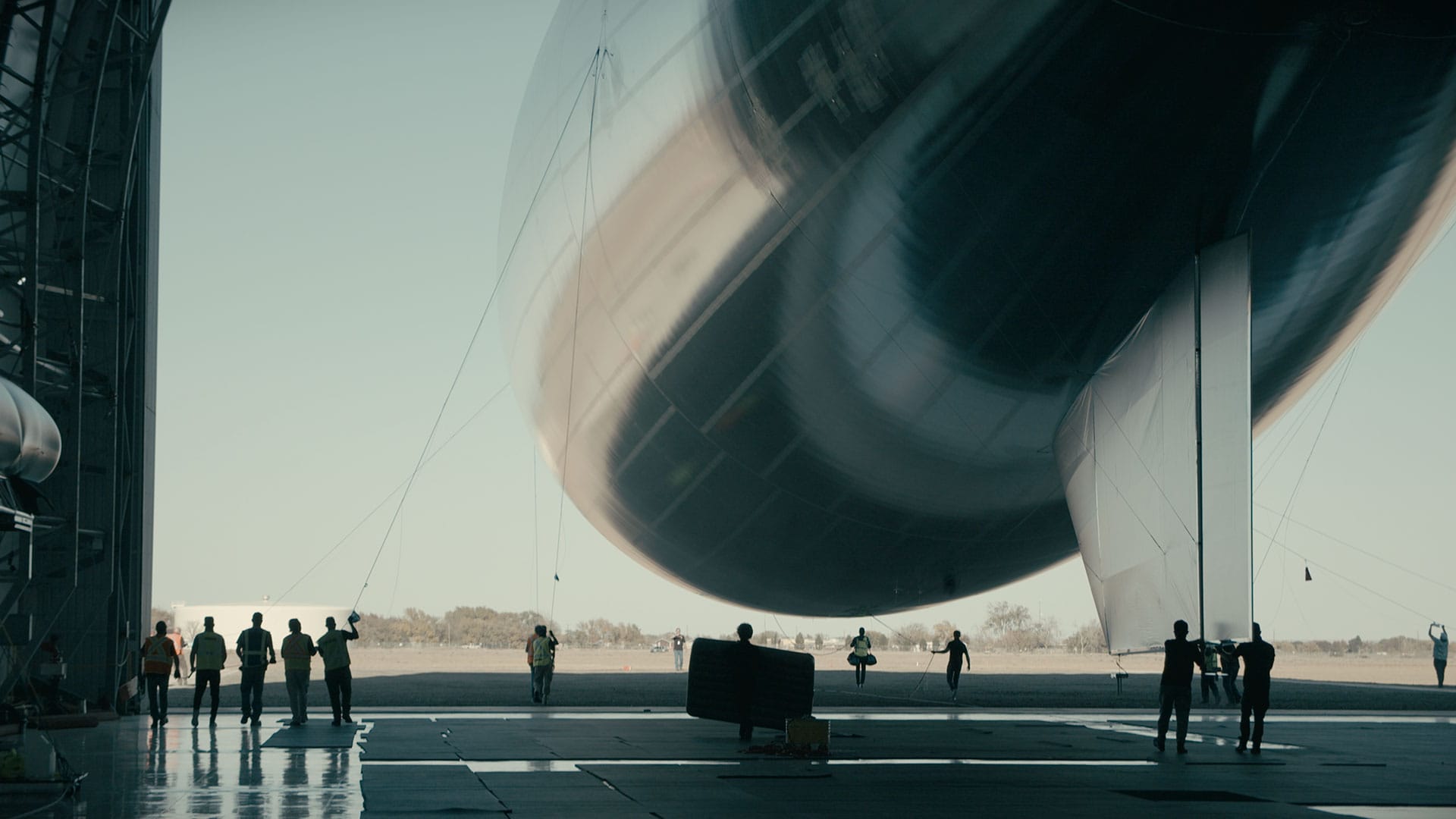
SoftBank'S Haps Pre-Commercial Services What To Expect In 2026
1. Pre-Commercials are a particular and meaningful Milestone
The terms used in this case are important. Pre-commercial services constitute one distinct stage of the development of any new communications infrastructure — beyond the initial demonstration, past proof-of-concept flight campaigns, and in the realm where real-world users get real service under conditions that are similar to what a commercial deployment looks like. This means that the platform can be operationally stable, that the signal has been tested to meet quality specifications that the actual application relies on and the ground infrastructure interfaces with the stratospheric telecom antenna successfully, and the legal clearances are in place so that the service can operate in areas of dense population. Being pre-commercial is not something to be considered a major marketing achievement. This is a functional one, for which the reason SoftBank is publicly committing to the goal with Japan in 2026, sets a high bar that engineering on both sides of this partnership has to set.
2. Japan is the best place to Try This First
Selecting Japan in the selection of a country for strategic pre-commercial services isn't unintentional. Japan has a variety of characteristics that make it close to ideal for first deployment site. The terrain of the country — mountainous terrain, thousands of inhabited islands as well as the long and complex coastlines -creates real coverage challenges that stratospheric infrastructure is designed to meet. The regulatory environment it operates in is sophisticated enough to deal with the spectrum and airspace issues which stratospheric operations can raise. Its existing mobile network infrastructure which is run by SoftBank and SoftBank, is the connectivity layer that the HAPS platform requires to connect to. Its population also has an ecosystem for devices as well as digital literacy to take advantage of stratospheric broadband services without needing an extended period of technological adoption that can delay significant uptake.
3. Expect the Initial Coverage to Focus on the areas that are not served and Strategically Important Areas
Pre-commercial deployments don't attempt to blanket the entire world at once. It's more likely to be a focused rollout targeting areas where the gulf between existing coverage and the benefits that stratospheric connectivity can deliver is most pronounced and also where the strategic demand for coverage prioritizing is the strongest. In Japan's context, this is the case for island communities that are currently dependent on high-cost and inadequate internet connectivity via satellite, the mountainous regions that have terrestrial network economics that have had a difficult time supporting adequate infrastructure coast zones, where resilience to disasters is a national priority given the risk of typhoon and seismic exposure in Japan. These regions offer the clearest demonstration of stratospheric connectivity's benefits, and the most valuable operational data that can be used to improve the coverage, capacity, and managing platforms before rolling out to more people.
4. Its HIBS Standard Is What Makes Device Compatibility Possible
One of those questions one might ask about broadband at the stratospheric level is whether it will require specialist receivers or works with ordinary devices. A framework called the HIBS framework is High-Altitude IMT Base Station -is the solution based on standards to that question. By conforming to IMT standards that are the basis of 5G and 4G networks across the globe, any stratospheric device operating as a hibs makes itself compatible with the smartphone and device ecosystem already present in the coverage area. For SoftBank's services that are pre-commercial, customers in the these areas should be capable to connect to stratospheric networks using their current devices without having to buy hardware. This is a key requirement for any service that is aiming to reach out to the population who live in remote areas who need alternatives to connectivity and are the least likely to purchase specialist equipment.
5. Beamforming Is The Way To Determine How Capacity Is Dispersed
A stratospheric based platform covering an expansive area can't offer the same capacity of use across the whole area. How spectrum and energy is allocated over the entire coverage area is the result of beamforming capabilities — the platform's capacity to direct signals towards areas locations where demand and users are concentrated rather than broadcasting all over the large uninhabited areas. For SoftBank's commercial phase, demonstrating that beamforming from the stratospheric antenna of a telecom network can offer commercially acceptable capacity to certain population centers within a large coverage area will be more important than demonstrating the coverage area. Wide coverage with a small, ineffective capacity is not worth the effort. Its targeted delivery of truly suitable broadband to zones of service confirms the commercial model.
6. 5G Backhaul Applications May Precede Direct-to-Device Services
In some deployment scenarios, it is the easiest and fastest to verify the use of stratospheric connectivity isn't direct-to-consumer broadband but rather 5G backhaul that connects existing ground infrastructures in areas where terrestrial backhaul isn't sufficient or non-existent. A remote community could have one or two network devices on the ground, but not have the capacity to connect to the larger network that can be useful. A stratospheric-based platform with that backhaul link can provide functional 5G coverage in communities served by existing ground equipment without requiring users to connect with the stratospheric platform directly. This type of use-case is easier for engineers to evaluate technically, and provides tangible and quantifiable value, and provides operational certainty in service performance before a more complex direct device-to-device component is added.
7. Sceye's Platform Performance in 2025 Sets the stage for 2026.
The timing of the first commercial services planned for 2026 depends on the results the Sceye HAPS airship achieves operationally in 2025. The validation of station-keeping and payload performance in real-time stratospheric conditions Energy system behaviour over multiple days, and integration testing needed to prove that the platform interfaces correctly with SoftBank's network infrastructure all require sufficient maturity before commercial services are able to begin. Updates on Sceye HAPS airship status until 2025 do not constitute minor issues in the news, they are the primary indicators of how well the milestone in 2026 is tracking in line or is accumulating the type of technical debt that extends commercial timelines to the side. The engineering progress in 2025 will determine the 2026 story being written ahead of time.
8. Disaster Resilience Will Be A Tested Capability, Not Just a Claimed One
Japan's disaster-prone nature means that any stratospheric service that is pre-commercial and operating throughout Japan will certain to experience conditions — storms, earthquakes, disruptions to infrastructure — that test the reliability of the platform and its utility as an emergency communications infrastructure. This isn't just a matter of the application context. It is among its most beneficial features. A stratospheric infrastructure that can maintain a station and provides connectivity and observation capability during an important weather or seismic event in Japan proves something that not even a small test controlled by a lab can reproduce. The SoftBank Pre-commercial phase will create real-world data on how the stratospheric infrastructure functions in the event of terrestrial networks being compromised — exactly the kind of evidence that all other potential operators of regions that are prone to natural disasters will need consider before committing to own deployments.
9. The Wider HAPS Investment Landscape Will Respond to What happens in Japan
The HAPS Sector has drawn significant investment from SoftBank and other companies, however the broader telecoms and infrastructure investing community remains in the midst of a watchful brief. Large institutional investors, national telecoms operators from other nations as well as governments that are evaluating stratospheric infrastructures for their own coverage and monitoring requirements are all following what happens in Japan with keen interest. Successful pre-commercial deployments -platforms on station operations, service operational, and benchmarks for performance -could accelerate investment decisions across the industry with a speed that ongoing demo flights and partnership announcements do not. Conversely, significant delays or performance gaps will require revision of timelines across the sector. The Japan deployment carries disproportionate weight over the entire stratospheric communications sector, not just for specifically the Sceye SoftBank partnership specifically.
10. 2026 Will Show Us Whether Stratospheric Connectivity Has Crossed the Line
There's an arc in the evolution of any new infrastructure technology between the time when it's promising from the moment when it becomes a reality. Mobile networks and internet infrastructures all crossed this point at distinct times -not when technologies were first demonstrated at the time, but when it had been initially reliable enough that individuals and institutions started making plans around its existence, rather than its future. SoftBank's precommercial HAPS service in Japan are the most plausible in the near future for the moment when stratospheric connectivity crosses that line. The platforms' ability to hold station through Japanese winters, whether the beamforming is able to provide sufficient capacity to island communities, and whether they can operate in the conditions Japan frequently encounters will determine whether 2026 will be known as the year that the stratospheric internet was a real infrastructure or if the timeline was re-set. Check out the top High altitude platform station for more examples including sceye earth observation, HAPS investment news, Sceye News, what's the haps, Stratospheric telecom antenna, softbank sceye partnership, Sceye News, sceye new mexico, sceye haps softbank japan 2026, Solar-powered HAPS and more.